

Across Leicester and Leicestershire, community organisations are operating under increasing pressure. Demand for services continues to rise, social need is becoming more complex, and funding remains stretched. At the same time, rapid advances in Artificial Intelligence (AI) are reshaping how organisations work, presenting both opportunity and risk—particularly for the grassroots organisations that sit closest to communities. Womentum CIC, a survivor-led organisation working across domestic abuse prevention, women’s empowerment and community education, is seeing these changes first-hand. Alongside growing demand for frontline support, we are also identifying a widening digital divide.
The digital divide in the voluntary sector
While larger organisations are beginning to integrate AI into operations, many smaller charities and community groups lack the capacity, confidence, and resources to do the same. Yet these organisations are often delivering essential, trust-based support to some of the most vulnerable people in society. Without access to digital tools and training, there is a risk that inequality is further embedded—this time in how organisations themselves operate.
AI as a practical tool, not a distant concept
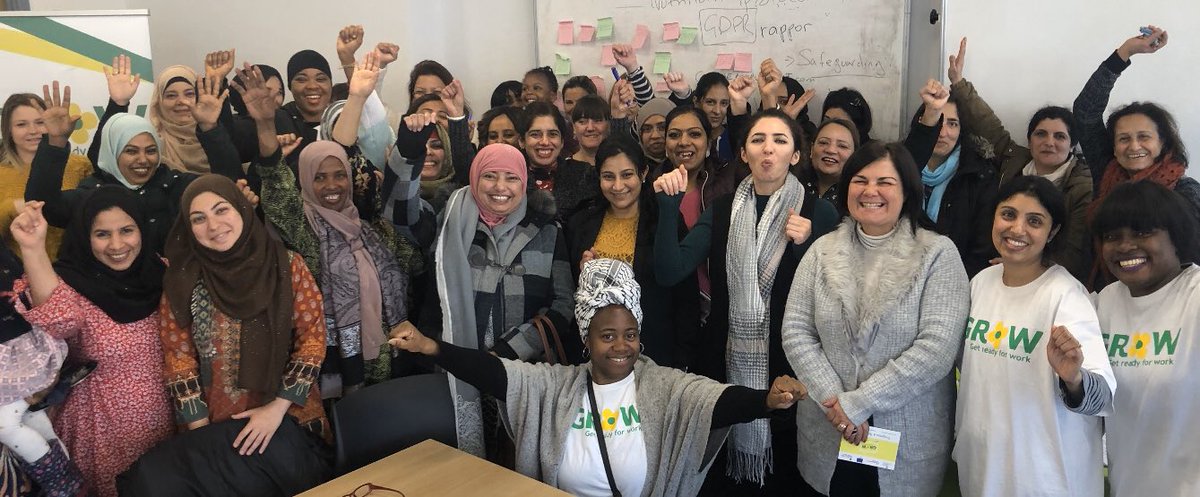
Through recent AI training workshops delivered in partnership with Belina Grove, we have seen how accessible digital education can make an immediate difference. Participants who initially felt unsure about technology have gone on to use AI tools for everyday tasks such as communication, planning, content creation, administration, and problem-solving. The outcome has been increased confidence, improved efficiency, and a stronger sense of adaptability in a rapidly changing digital environment.
We are also seeing growing interest from grassroots organisations who want to apply AI practically—reducing administrative pressure, strengthening funding applications, improving communications, and making better use of limited resources. For many, AI is no longer optional; it is becoming a core tool for sustainability.
Strengthening communities through balanced development
Alongside digital inclusion, our community work continues to highlight another critical area: the importance of positive male engagement. Creating safer, healthier communities cannot be achieved by focusing on one group alone. Many men and boys want to contribute positively to their families, workplaces and communities, but lack structured support, role models, and safe spaces to develop these skills.
This insight is shaping Womentum CIC’s emerging House of Respect and Male Allyship work, which focuses on healthy relationships, responsibility, respect, and positive leadership. In a time where young people are heavily influenced by social media and conflicting narratives, strong community-based guidance is increasingly important.
A joined-up approach for the future
The future of community development lies in integration—not isolation. Empowering women, engaging men positively, strengthening grassroots organisations, and building digital capability must all sit alongside each other. Technology alone will not solve social challenges. However, when combined with education, empathy, leadership and lived experience, it becomes a powerful enabler of change.
A call for collaborative investment
As AI continues to reshape society, it is essential that the voluntary and community sector is not left behind. Investment in accessible digital skills, leadership development and prevention-focused community programmes is an investment in stronger organisations and more resilient communities.
Womentum CIC welcomes collaboration with businesses, funders, local authorities and community partners who share a commitment to inclusive innovation and long-term social impact. Together, there is an opportunity not only to respond to change—but to lead it.
Speaking of the partnership Mumtaz said: “Today, I want to say thank you to the Belina Grow team for their support in delivering our AI training workshops. This wasn’t just a partnership, it was a real shift. Together, we’ve helped people move from hesitation around technology to confidence and practical use of AI in their everyday work. The impact is clear—better communication, stronger planning, simpler ways of working, and real digital inclusion at grassroots level. Most importantly, it’s another step towards closing the digital divide through access, opportunity, and belief.”
Mumtaz, Womentum CIC